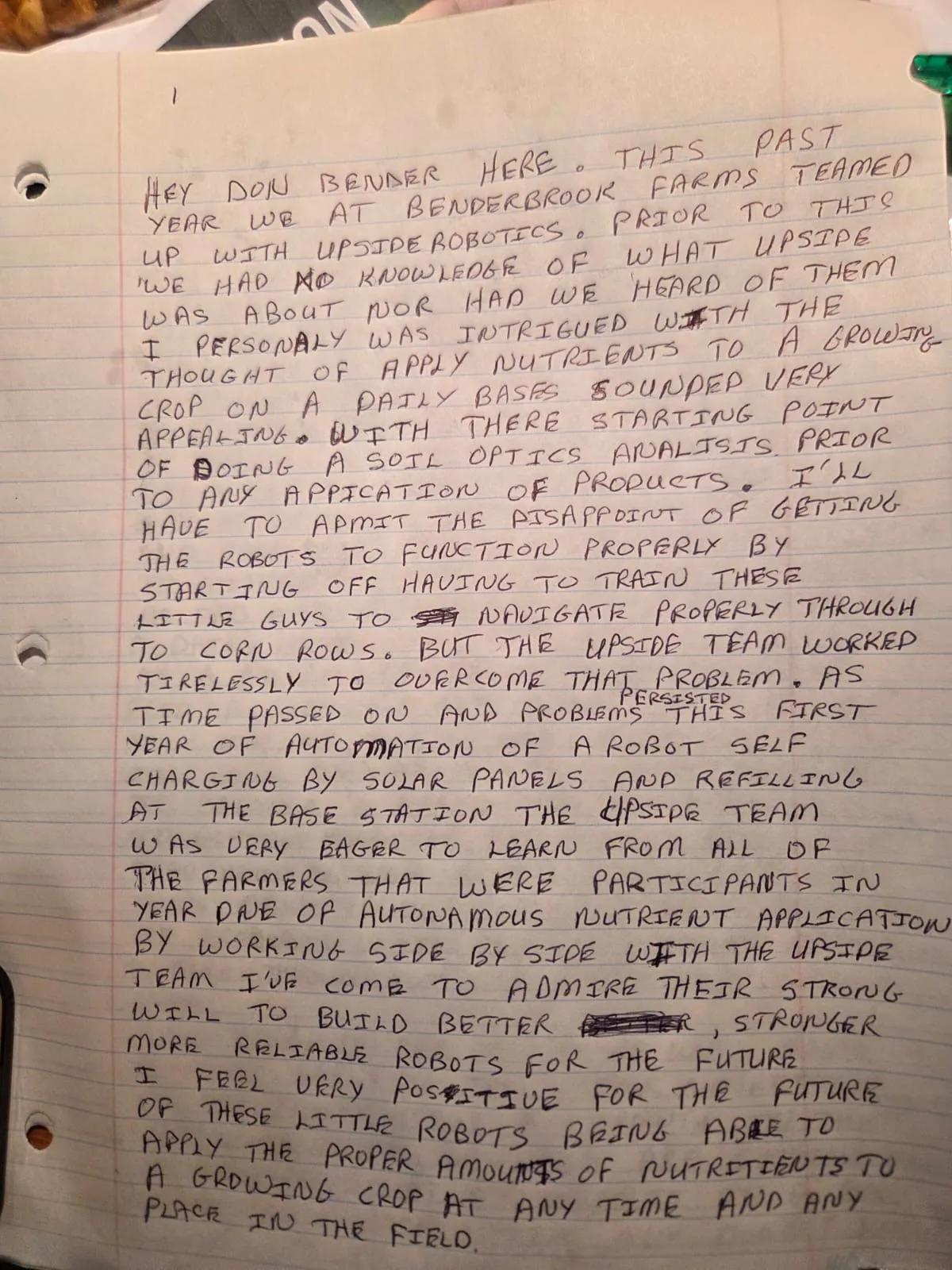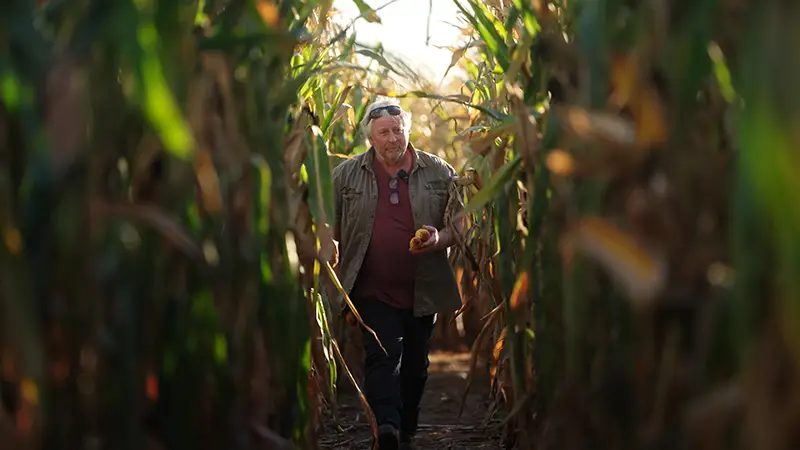
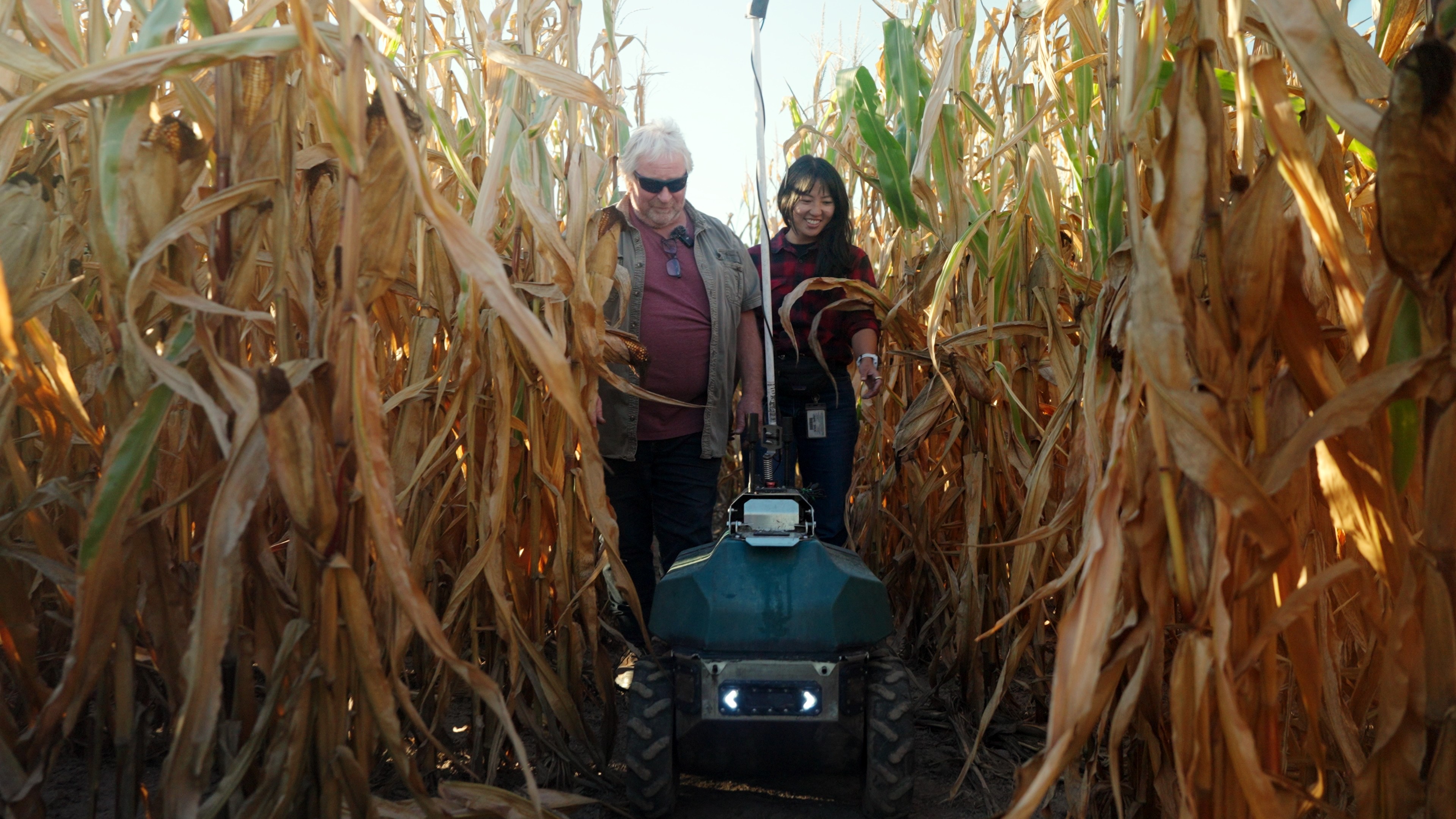
Hey, Don Bender here.
This past year, we at Benderbrook Farms teamed up with Upside Robotics. Prior to this, we had no knowledge of what Upside was about, nor had we even heard of them.
I personally was intrigued with the thought of applying nutrients to a growing crop on a daily basis. It sounded very appealing. With that starting point, the idea of doing a soil optics analysis prior to any application of products made sense.
I’ll admit, the disappointment at the beginning came from getting the robots to function properly — especially having to train these little guys to navigate correctly through corn rows. But the Upside team worked tirelessly to overcome that problem.
As time passed and problems persisted through this first year of automation, the robot evolved to include self-charging via solar panels and refilling at the base station. Throughout all of this, the Upside team was very eager to learn from all of the farmers who participated in year one of autonomous nutrient application.
By working side by side with the Upside team, I’ve come to admire their strong will to build better, stronger, and more reliable robots for the future. I feel very positive about what the future holds for these little robots — especially their ability to apply the proper amounts of nutrients to a growing crop, at any time and any place in the field.
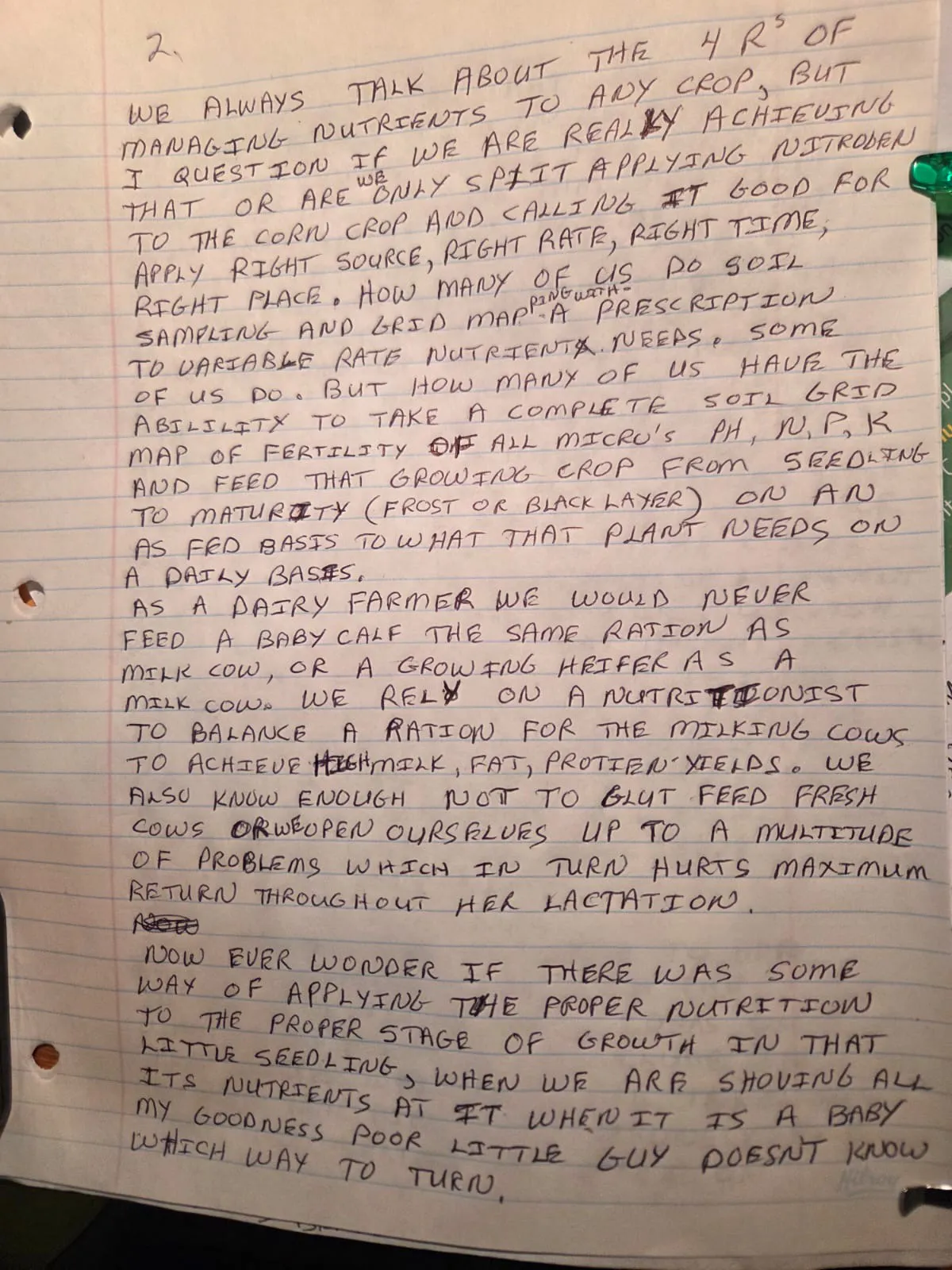
We always talk about the “4Rs” of managing nutrients for any crop. But I question whether we are really achieving that — or if we are simply split-applying nitrogen to a corn crop and calling it good.
Right source.
Right rate.
Right time.
Right place.
How many of us actually do soil sampling and grid mapping to create a true prescription for variable-rate nutrients? Some of us do. But how many of us have the ability to take a complete soil fertility map — including micros, pH, N, P, and K — and then feed that growing crop from seedling to maturity (frost or black layer) on an as-needed, daily basis?
As a dairy farmer, we would never feed a baby calf the same ration as a milk cow, or feed a growing heifer the same ration as a lactating cow. We rely on a nutritionist to balance rations for milking cows to achieve milk, fat, and protein yields. We also know enough not to overfeed fresh cows, because doing so opens us up to a multitude of problems that ultimately hurt maximum return throughout lactation.
So why do we treat crops any differently?
Now imagine if there was a way to apply the proper nutrition at the proper stage of growth — especially when that little seedling is being shown all its nutrients at once, when it’s just a baby and doesn’t know which way to turn.
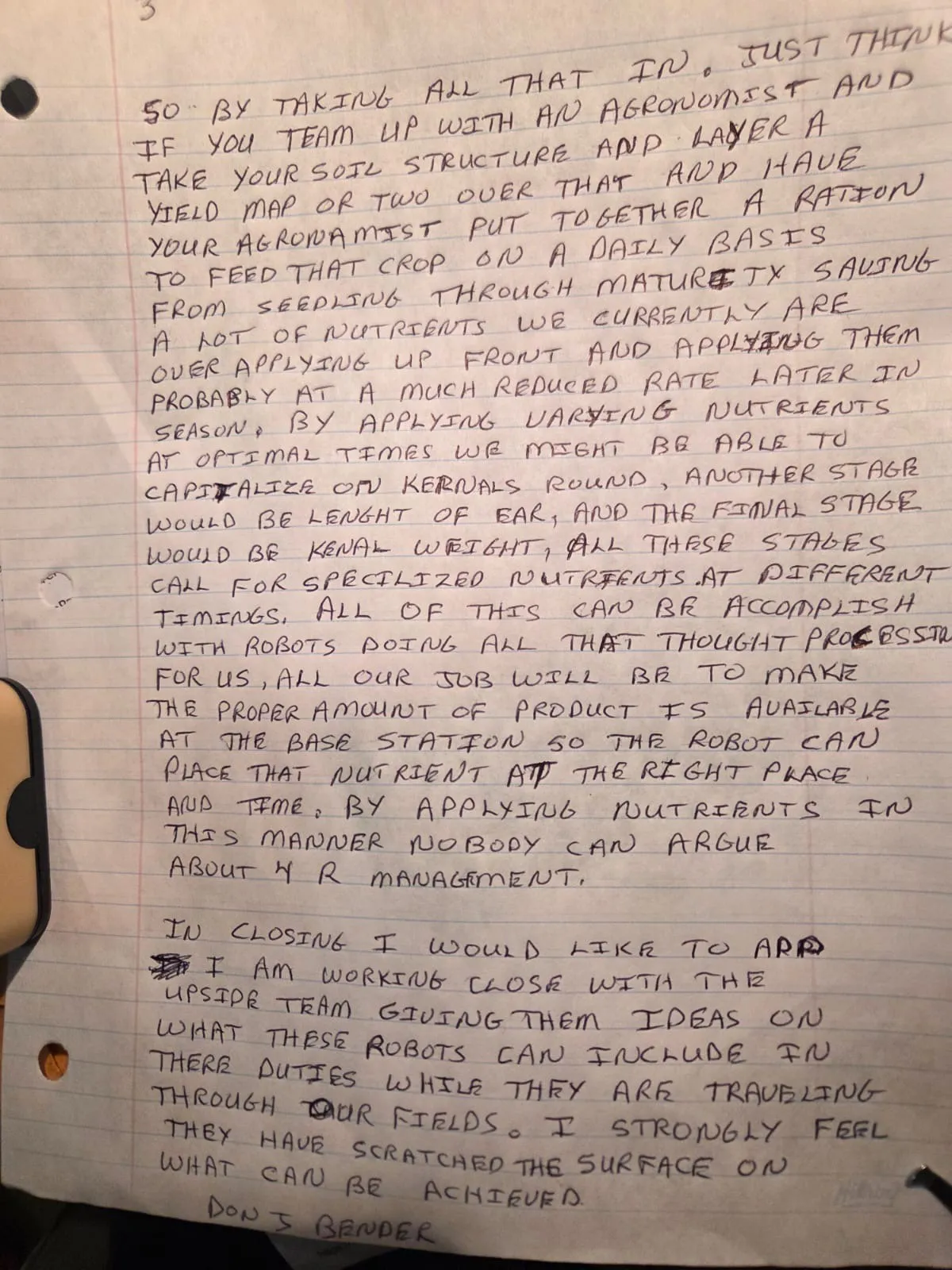
By taking all of this into account, just think what could happen if you teamed up with an agronomist, took your soil structure, layered yield maps over top, and had that agronomist put together a ration to feed the crop on a daily basis — from seedling through maturity.
A lot of nutrients today are applied up front, with reduced rates later in the season. But by applying varying nutrients at optimal times, we may be able to capitalize on kernel count, kernel length, ear length, and final kernel weight.
Each of these stages calls for specialized nutrients at different timings.
All of this can be accomplished with robots doing the thinking and processing for us. Our job becomes much simpler: making sure the proper product is available at the base station so the robot can place that nutrient at the right place, at the right time.
When nutrients are applied this way, it’s hard to argue against true 4R management.
In closing, I would like to continue working closely with the Upside team — giving them ideas on what these robots can include in their duties while traveling through our fields.
I strongly feel that we have only scratched the surface of what can be achieved.
— Don J. Bender